
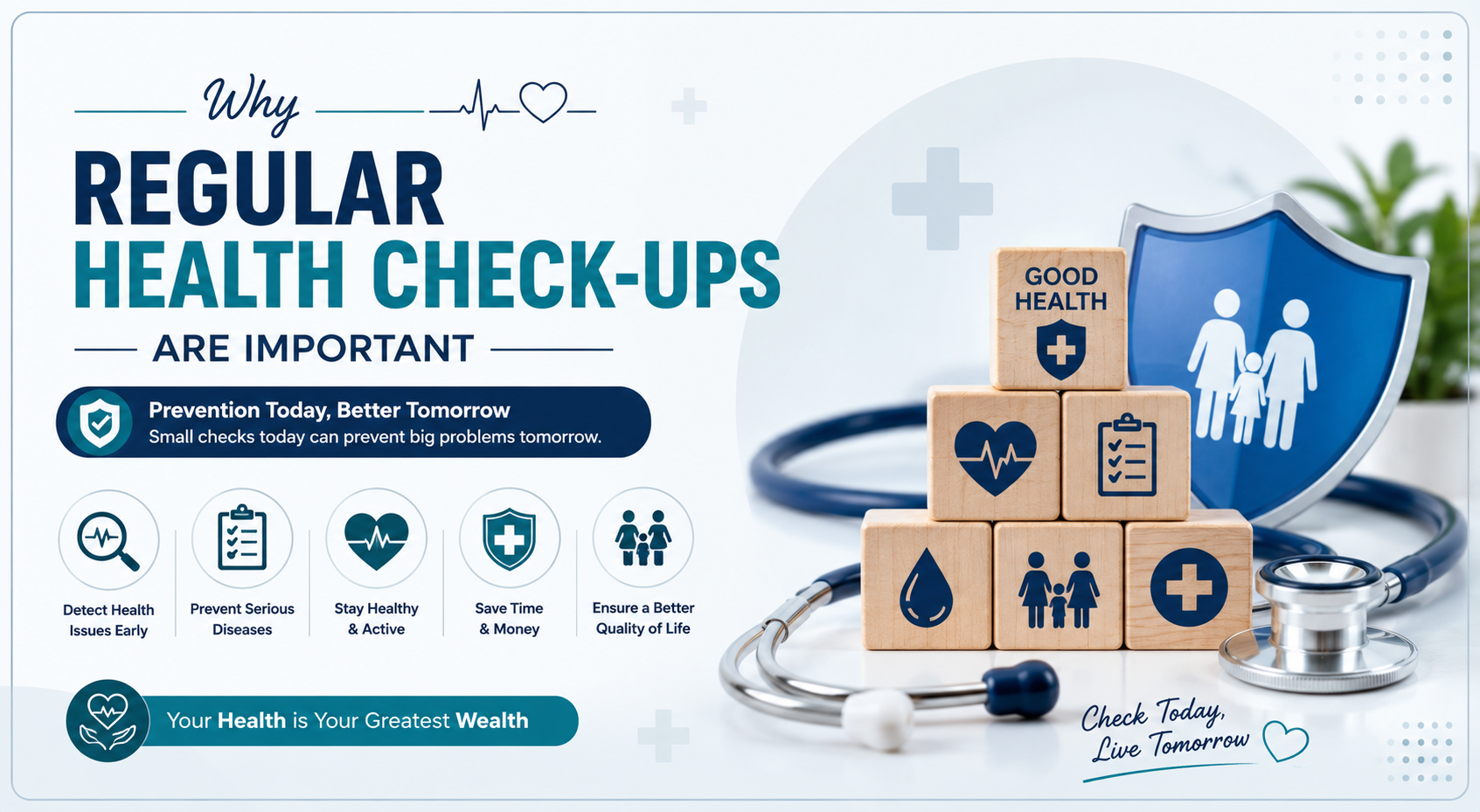
Why Regular Health Check-ups Are Important
Regular health check-ups are an important part of preventive healthcare. Even when you feel healthy, routine medical evaluations can help monitor important health indicators and identify potential problems at an early stage.
Early Detection of Health Problems
Some health conditions may develop without obvious symptoms during their early stages. Routine check-ups can help doctors identify unusual changes and recommend further evaluation when necessary.
Monitor Blood Pressure
Blood pressure is an important indicator of cardiovascular health. Regular monitoring can help identify abnormal readings and allow you to discuss them with a healthcare professional.
Check Blood Sugar Levels
Blood sugar monitoring can be especially useful for people with risk factors such as family history, excess weight or an inactive lifestyle. Your doctor can advise whether testing is appropriate for you.
Understand Your Health Risks
Your age, family history, lifestyle and existing health conditions can influence your healthcare needs. A doctor can help you understand these factors and recommend suitable preventive measures.
Build Better Health Habits
A health check-up is also an opportunity to discuss nutrition, physical activity, sleep, stress and other lifestyle habits with your healthcare provider.
When Should You Get a Check-up?
The frequency of health check-ups depends on your age, medical history, risk factors and individual healthcare needs. Instead of following the same schedule for everyone, discuss an appropriate check-up plan with your doctor.
Make Preventive Healthcare a Priority
Taking care of your health before a problem becomes serious can be an important part of long-term wellness. Regular medical consultations and healthy lifestyle choices can work together to support better health.
Disclaimer: This article provides general health information and does not replace professional medical diagnosis, treatment or advice.